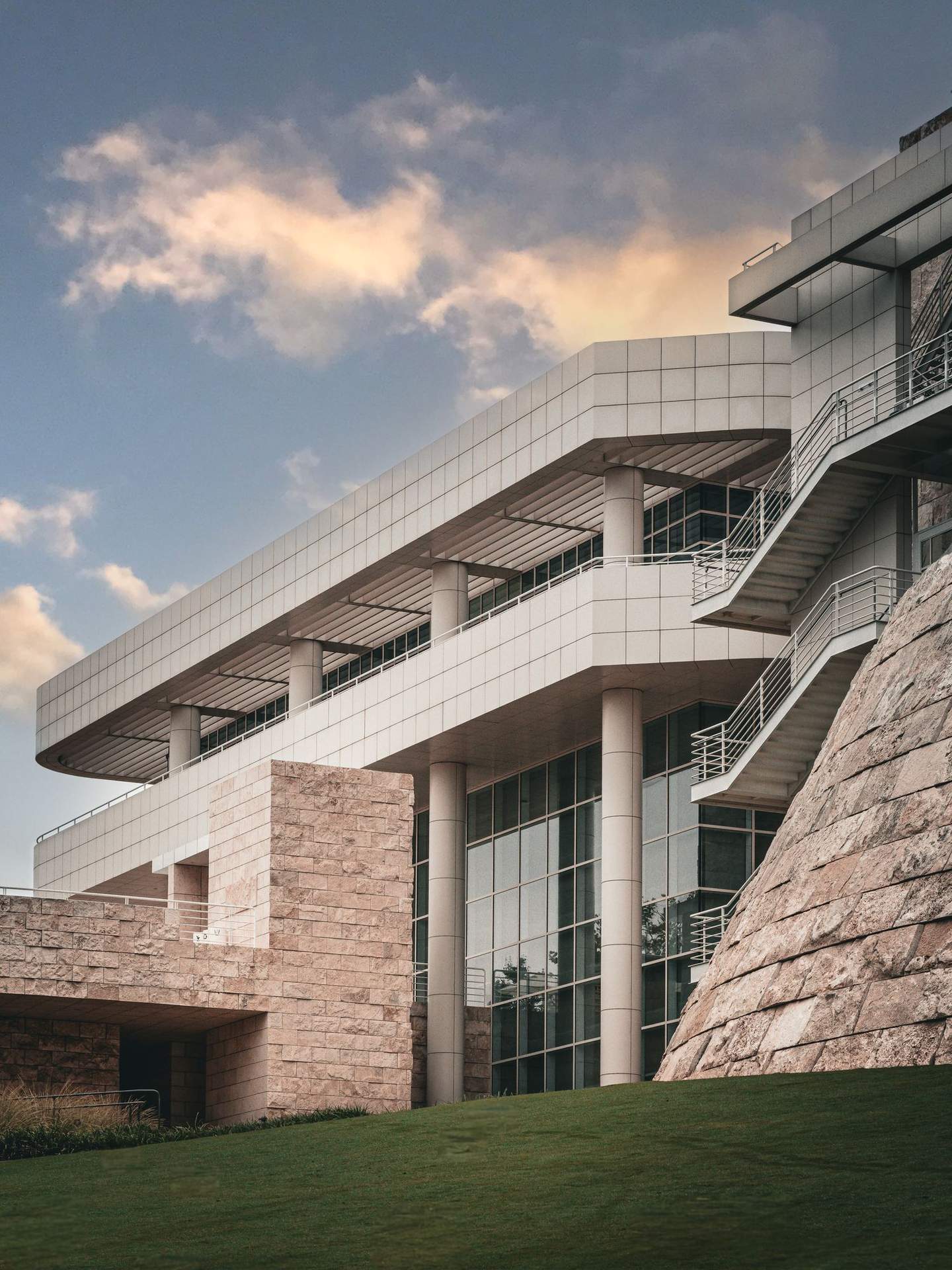
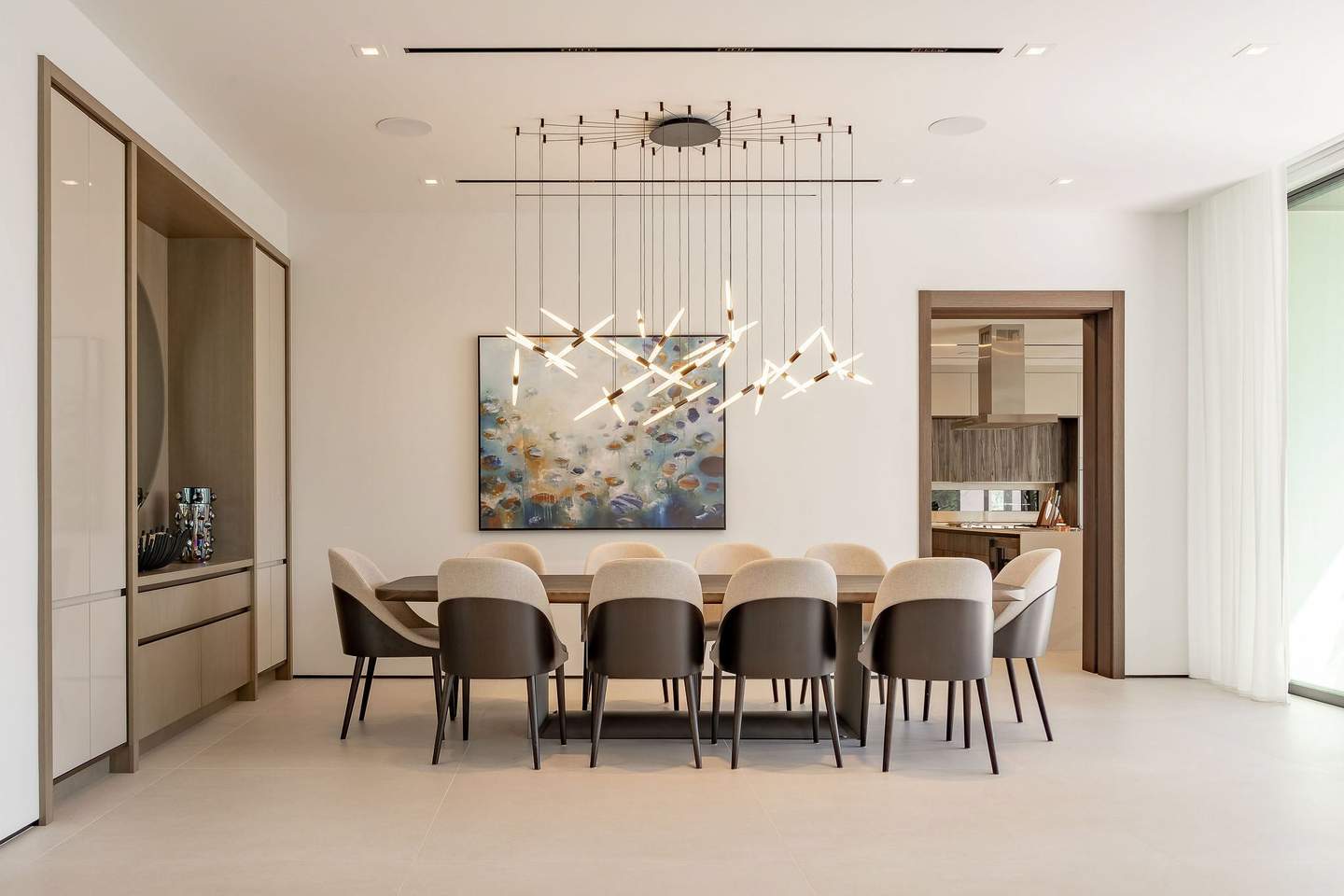
New York doesn't reward the wide shot. The city is too dense, too layered, too contested - point a camera at a Manhattan block and you get a visual argument, not a photograph. What New York rewards is looking closely at the thing directly in front of you.
I've walked a lot of miles in this city over a lot of trips, and somewhere along the way I stopped trying to make sense of the skyline and started paying attention to facades. To the materials buildings are made of, the way those materials age and catch light, the design decisions that get made at the scale of a single panel or a single floor - decisions that most people never notice because they're looking at the building as a whole or, more likely, looking at their phone.
These images are from those moments. No single shoot, no particular plan. Just a camera and the slow accumulation of details that stopped me mid-stride across years of time in the city.
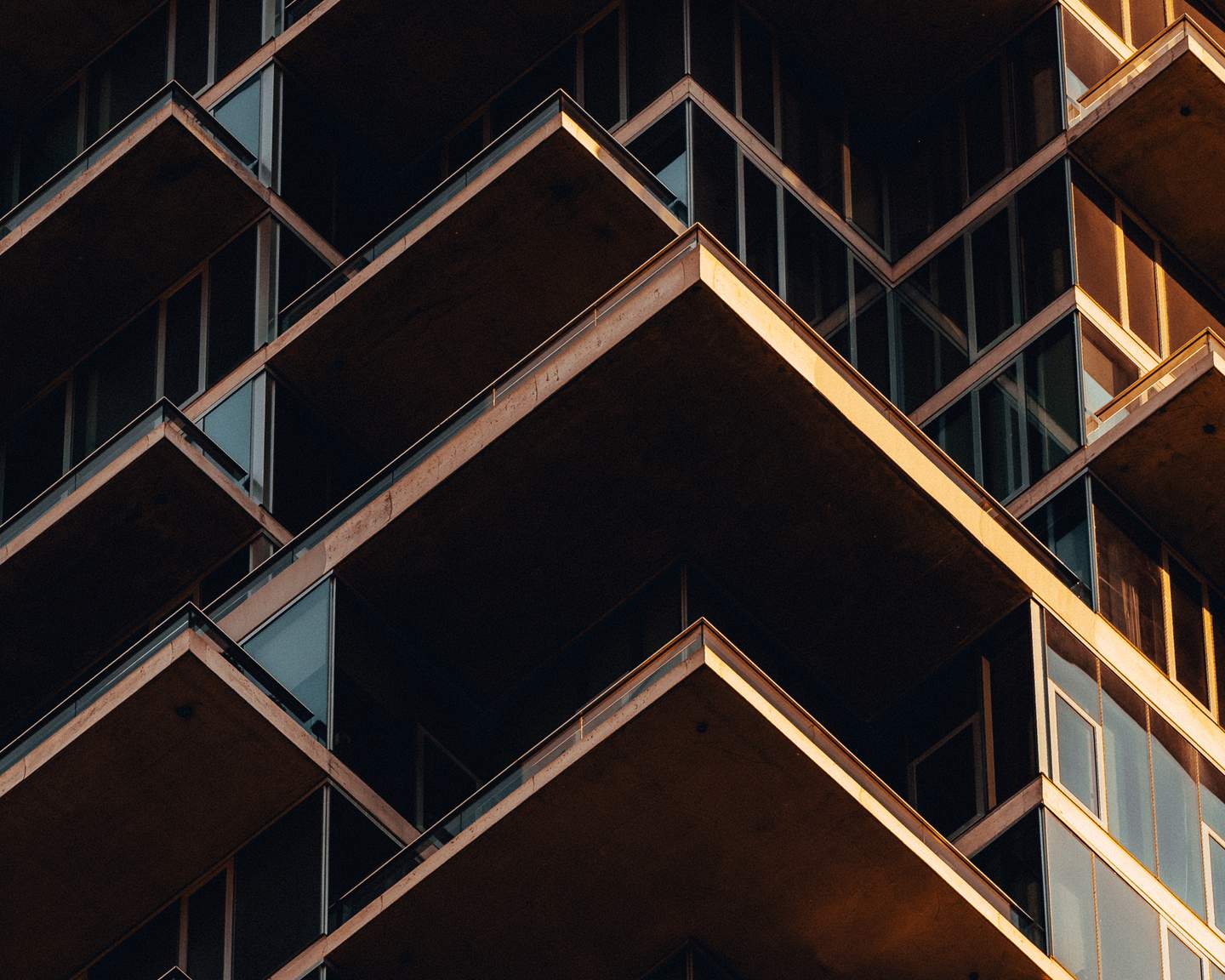
The first thing you learn about New York facades is that material choice is a position statement. Every building in this city is in conversation - sometimes argument - with the buildings around it, the neighborhood it sits in, the era it was built in, and the market it was designed to serve. Concrete says one thing. Glass says another. Stone says something different again, and the distance between what a material communicates at street level and what it communicates from across the river is one of the fundamental tensions of urban architecture.
56 Leonard is making a specific argument with raw concrete: that a luxury residential tower doesn't need to be smooth, reflective, or anonymous to read as premium. The exposed slab edges are the building's primary ornament. Herzog & de Meuron have always understood that material honesty, executed with precision, is more interesting than applied decoration.
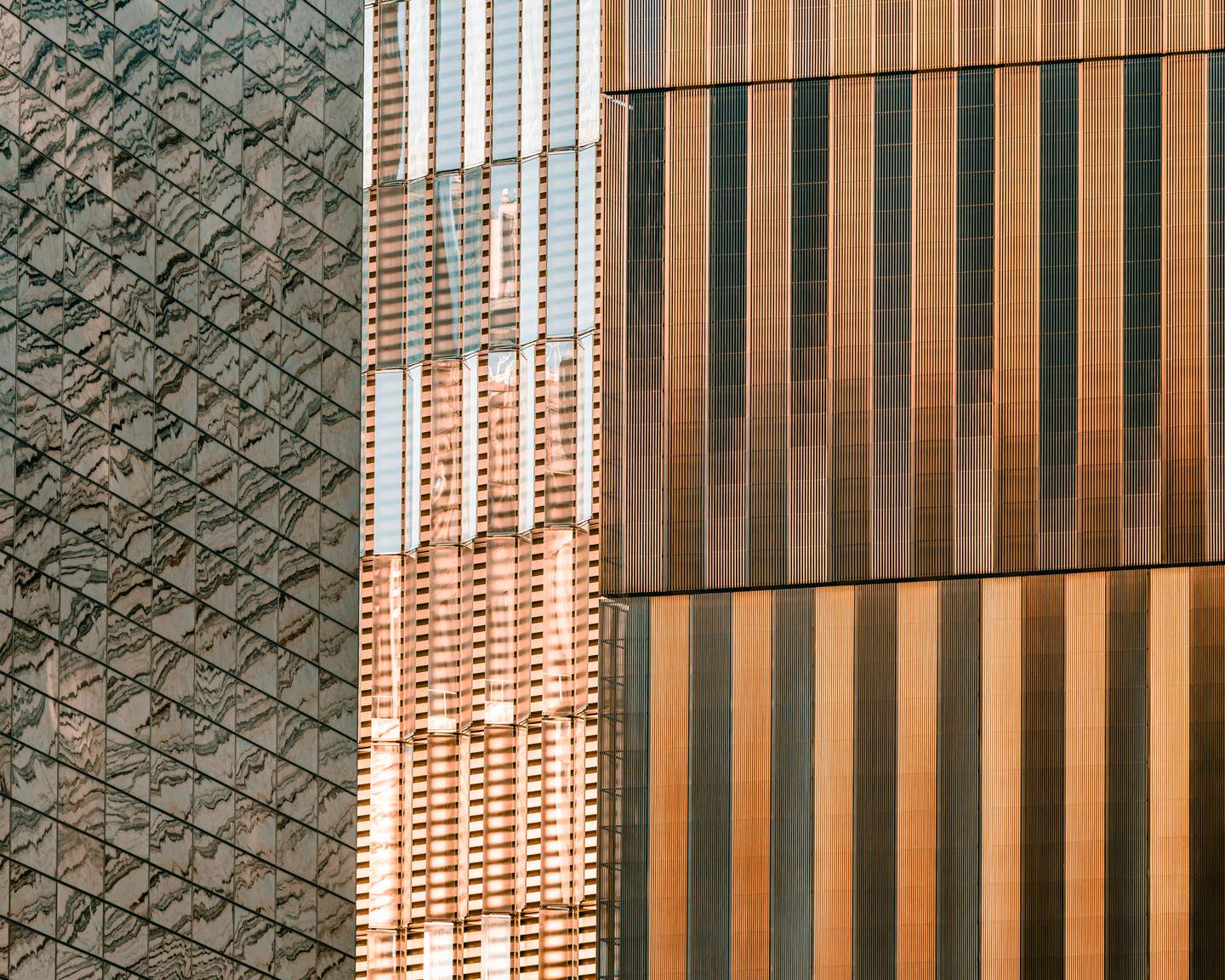
One World Trade is a building that most people experience from a distance - as skyline, as symbol, as the tallest point on the Manhattan horizon. Getting close to it changes the reading entirely. The base geometry, where the building negotiates its relationship with the street before ascending 1,776 feet, is where the architectural intelligence is most concentrated. The angular faceting isn't decorative - it's structural and symbolic, the building's formal response to the site it occupies and the history it carries. From thirty feet away, it reads as pure abstraction.
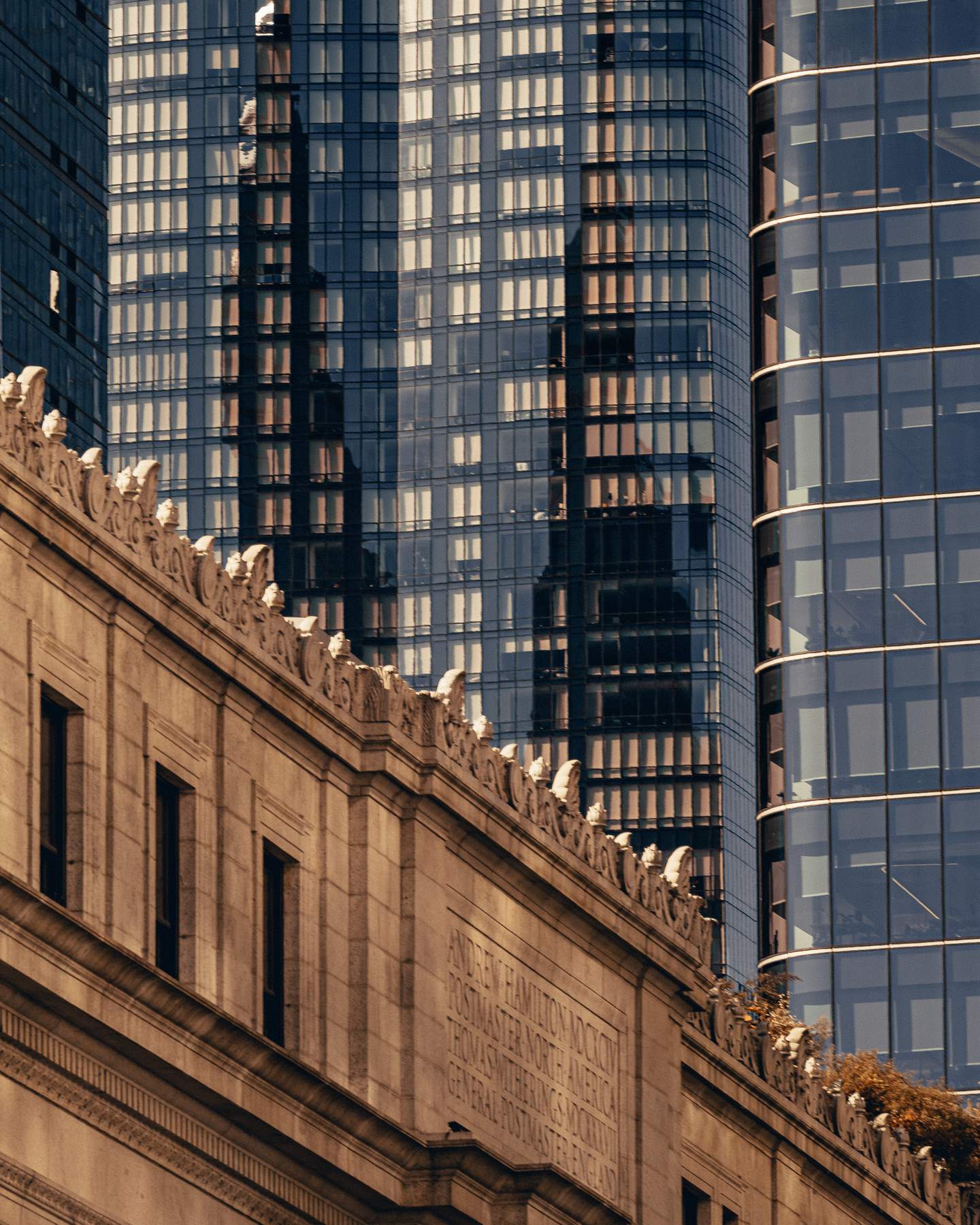
This image is the one that most clearly explains why I walk rather than drive in New York. At street level, with your face tilted up at the right angle, the carved ornamental detail of a Beaux-Arts building - each bracket, each figure, each precisely chiseled letter - sits in the same frame as the curtain wall towers that replaced its neighbors. The stone is warm, hand-worked, obsessively detailed. The glass is cool, machined, anonymous. They coexist without resolution, which is the truest possible portrait of the city.
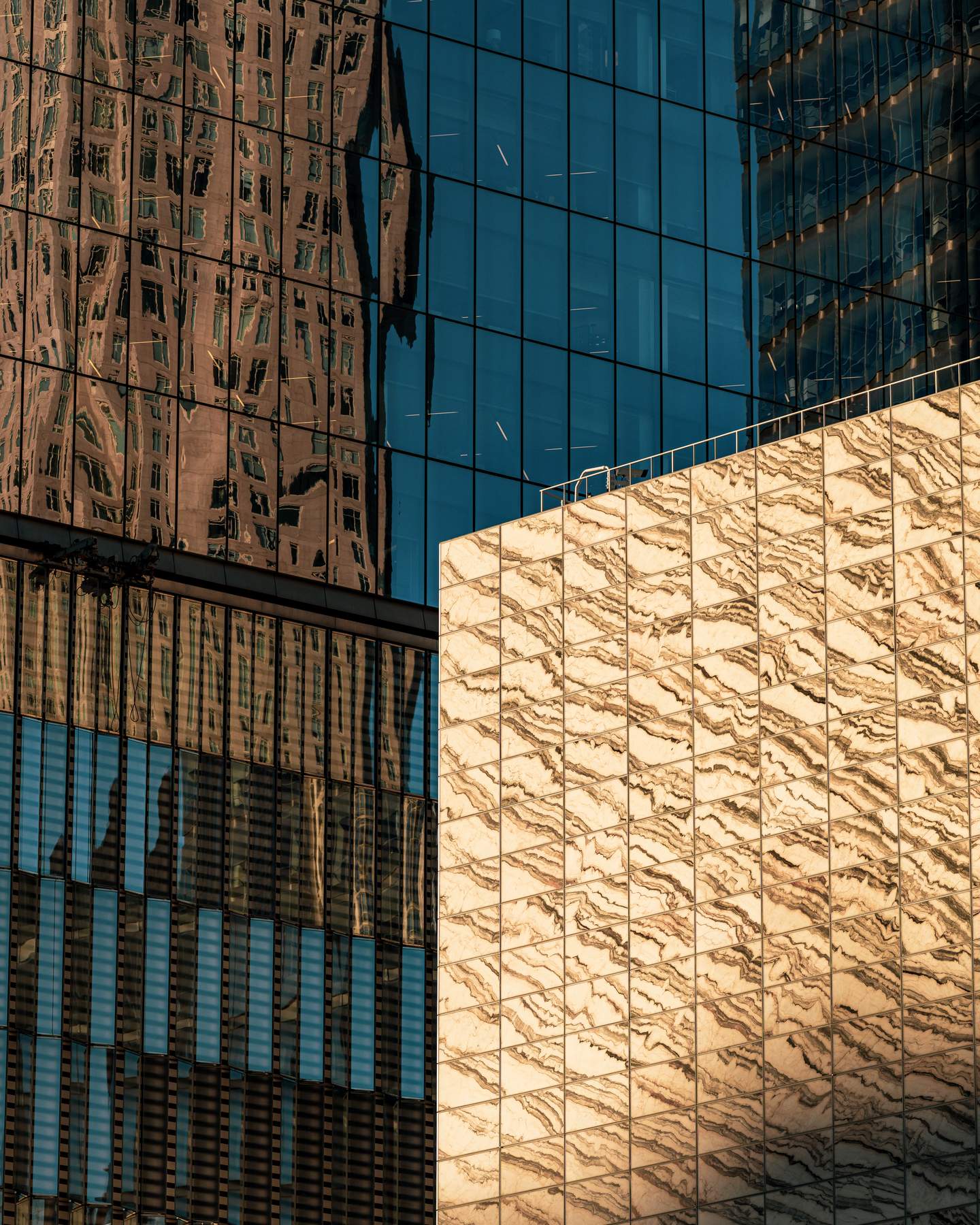
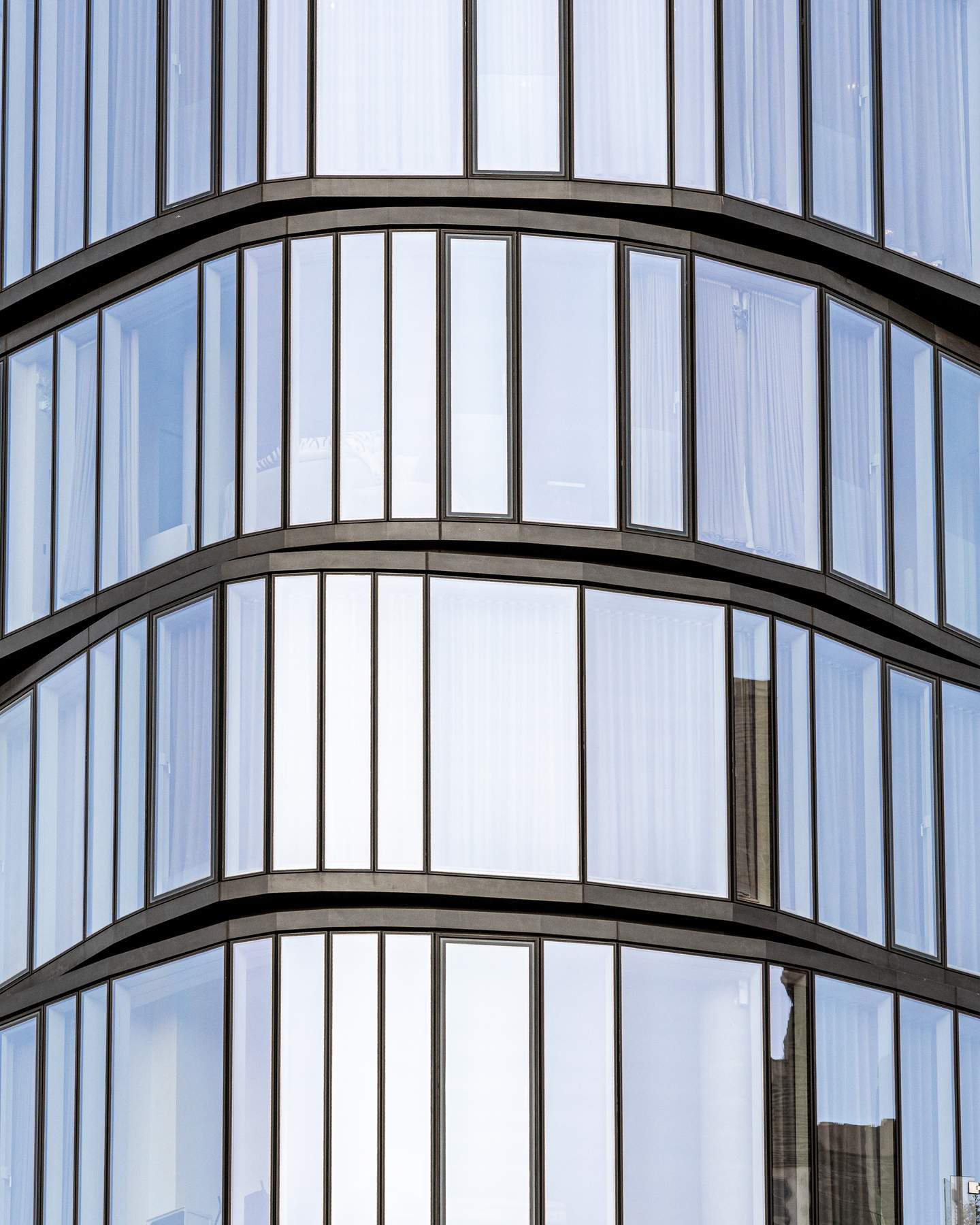
The curved glass building is the one that stops me longest. Standing close enough that the curve fills the frame, the reflections become something else entirely - a compressed, warped version of the surrounding city, bent around the building's form. New York's street grid is relentless and orthogonal. A building that refuses that logic is a provocation. KPF's best commercial work earns that provocation.
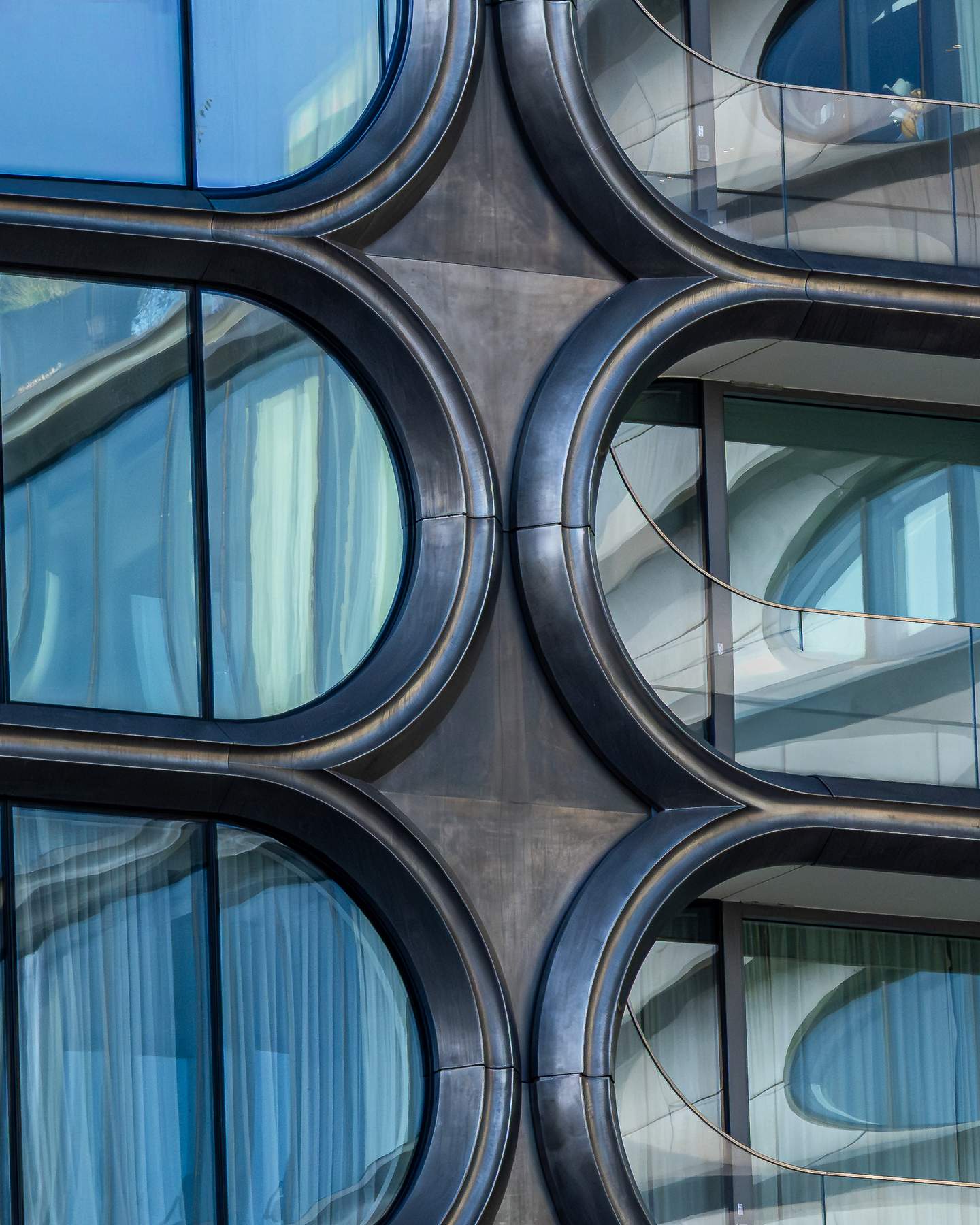
Hadid's 520 West 28th rewards getting close more than any other building in this set. From the street it reads as a striking residential tower with circular balcony forms. Move to within twenty feet of the facade and the building dissolves into something else: the geometry of the bronze framing takes over, the circles and the negative space between them competing for dominance, the blue glass behind each aperture catching the sky at a slightly different angle. The pattern is precise but the effect is organic. That tension - between the mathematical and the intuitive - is what Hadid spent a career pursuing. At close range, on this facade, she achieved it completely.
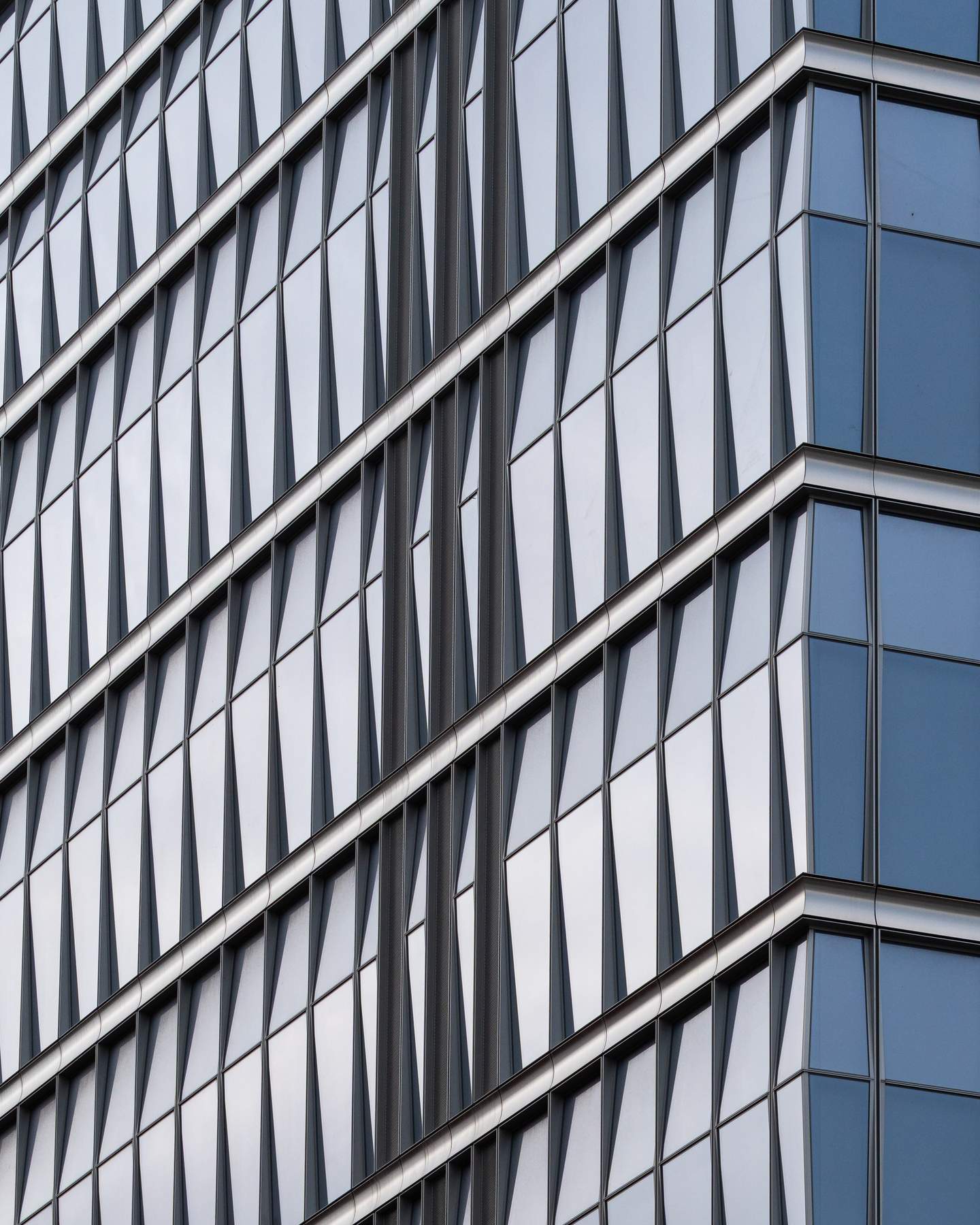
This is the image that surprised me most in editing. On the street I shot it quickly, drawn by the pattern but not fully understanding what I was looking at. Reviewing it later, the sinuous movement of the fin system - the way the surface appears to breathe - is more sophisticated than I registered in the moment. Someone spent real design effort on a facade system that most people walk past without stopping. That's the kind of decision that only makes sense if you believe architecture is for the city as much as for the client.
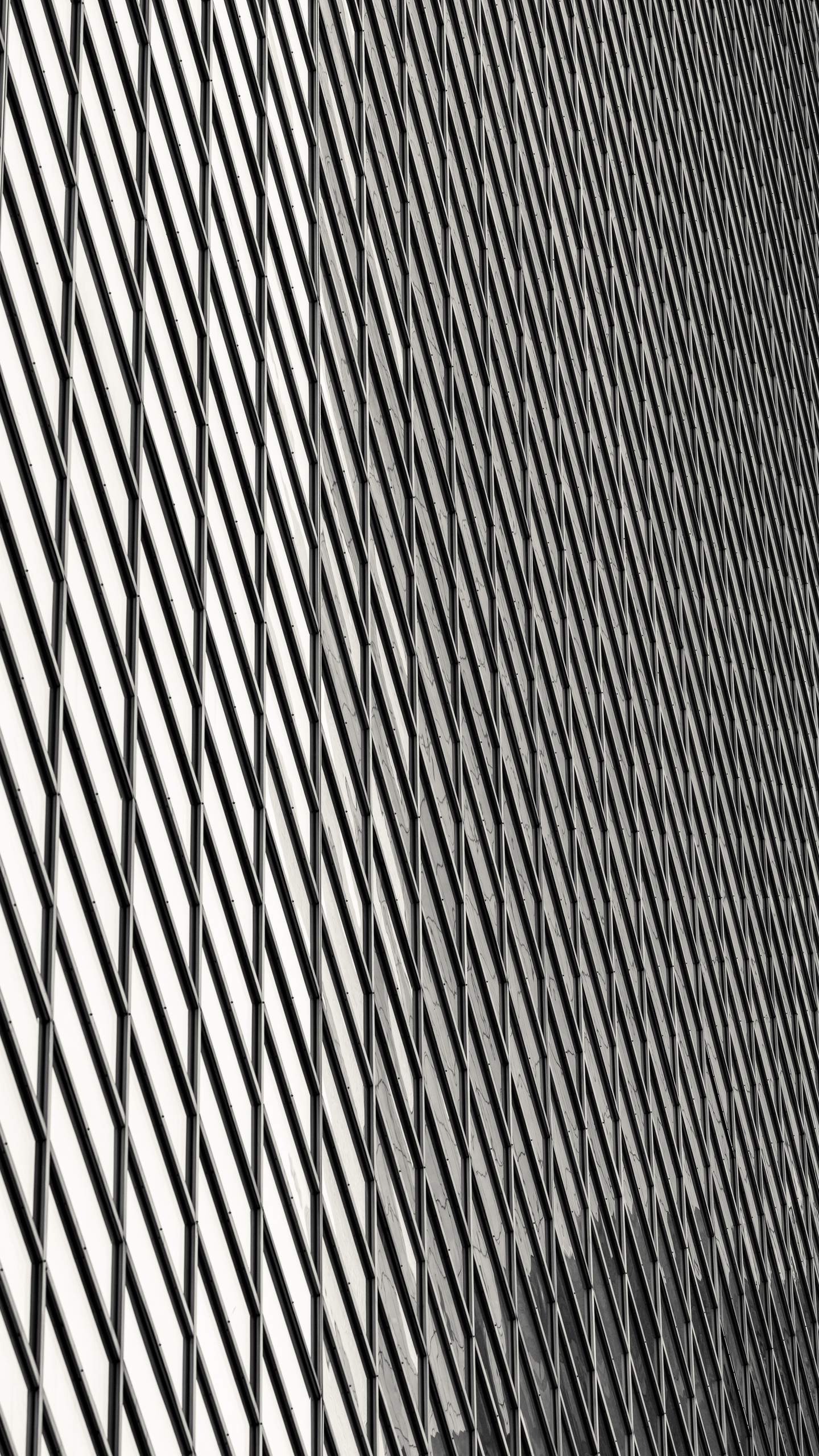
The diamond grid image is where the series ends because it's where documentation stops entirely. There's no readable building here, no historical context, no named architect. Just a surface doing something interesting in the light. Which is, in the end, what all of these images are about - the moment when a building stops being a building and becomes something you want to stand in front of for a while.
New York will keep making these surfaces, block by block, facade by facade, material by material. The skyline gets the attention. The skin deserves it.
Architecture Photography
Explore architecture photography
Publication-grade architectural photography for design firms, developers, and interiors teams across South Florida and beyond.
View architecture photographyTags